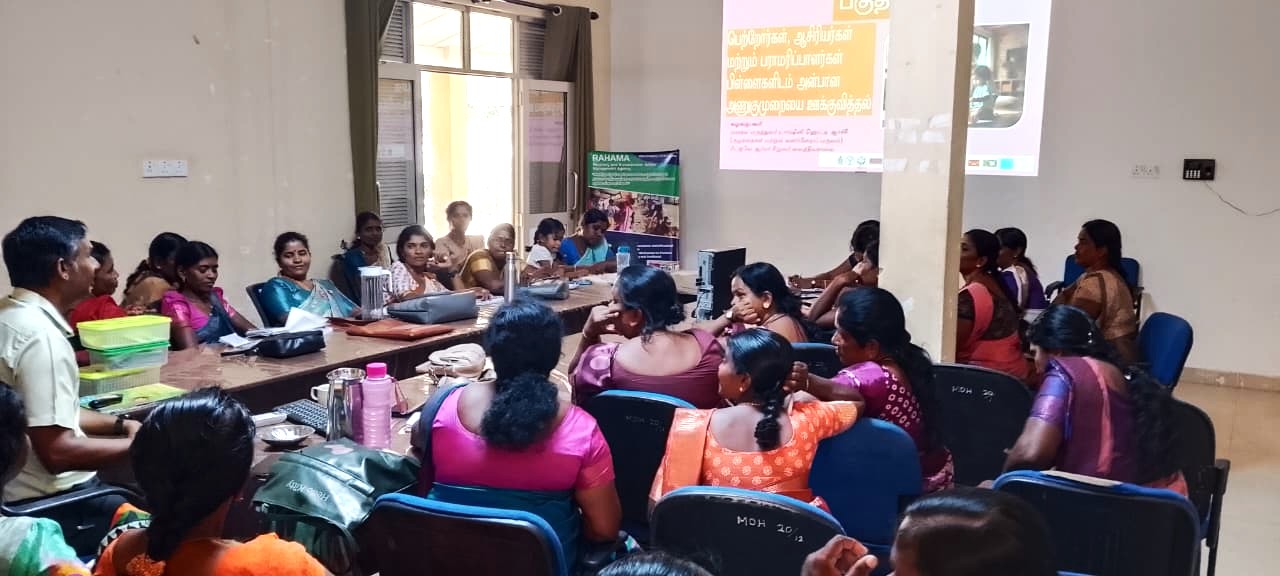
The Thunukkai Divisional Mental Health Program for preschool teachers was successfully conducted over three days from 15th to 17th April 2026 at the MOH Conference Hall, in collaboration with the Medical Officer of Health (MOH) office and the Education Department.
A key feature of this program was the integration of the FORUT Mental Health “Good Helper” concept, which emphasizes strengthening supportive relationships, empathy, active listening, and non-judgmental assistance within families, schools, and communities. Preschool teachers were introduced to the role of “good helpers” who can identify emotional distress in children early and provide appropriate psychosocial support or referral when needed.
The program brought together 33 preschool teachers and 20 MOH staff with the objective of strengthening mental health awareness, improving early childhood care practices, and enhancing the role of preschool teachers as key agents in child wellbeing, emotional support, and family guidance.
RAHAMA has kicked off distribution of school kits for 841 children at schools. After reopening of schools, on December 17, 2025, 120 school children, who were recommended by the school authorities in coordination with our regional partners and lacked stationeries to avoid delay in going back to school, received school kits in Muththayankaddu, Palinagar, and Pandiyankulam.
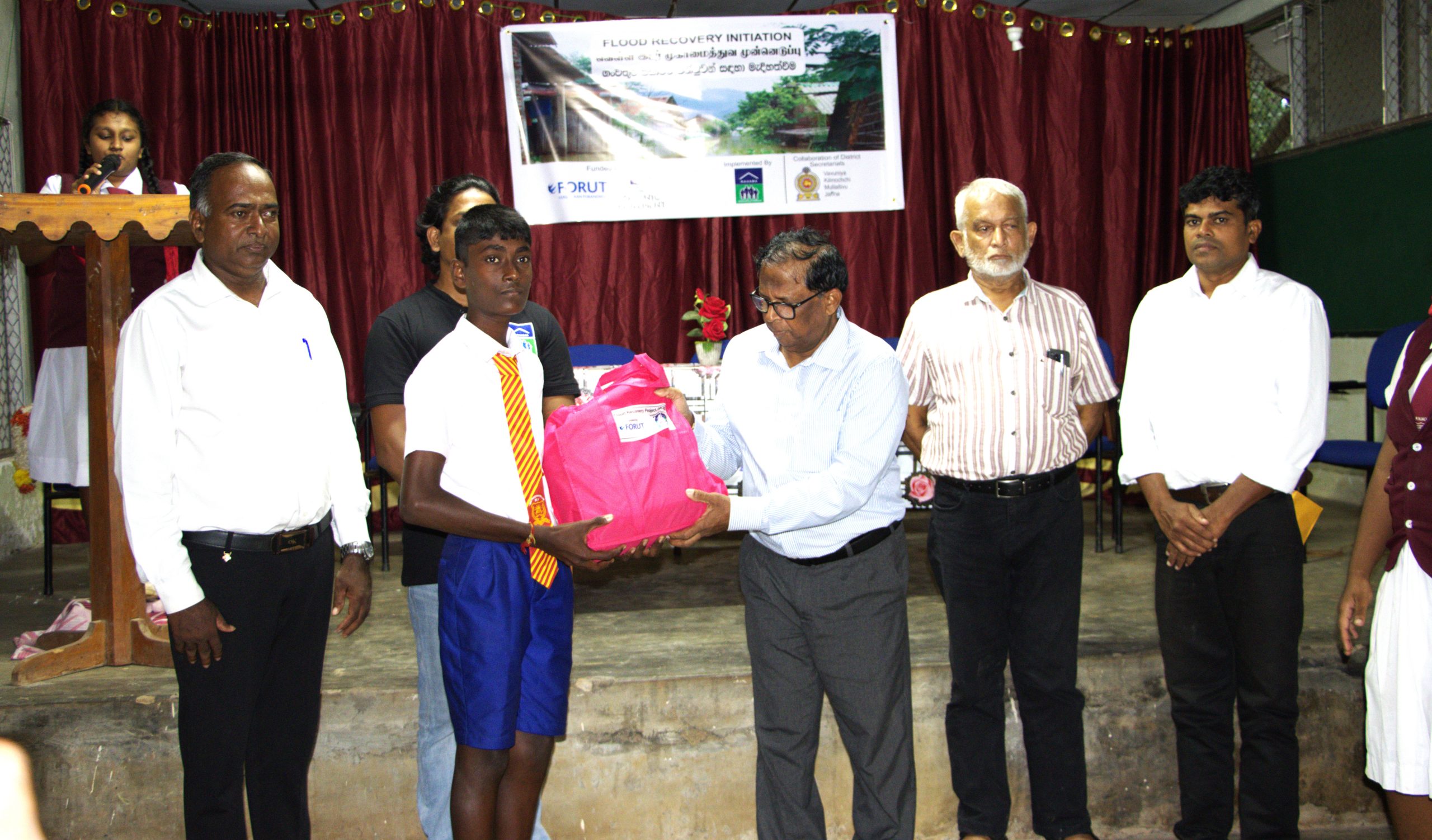
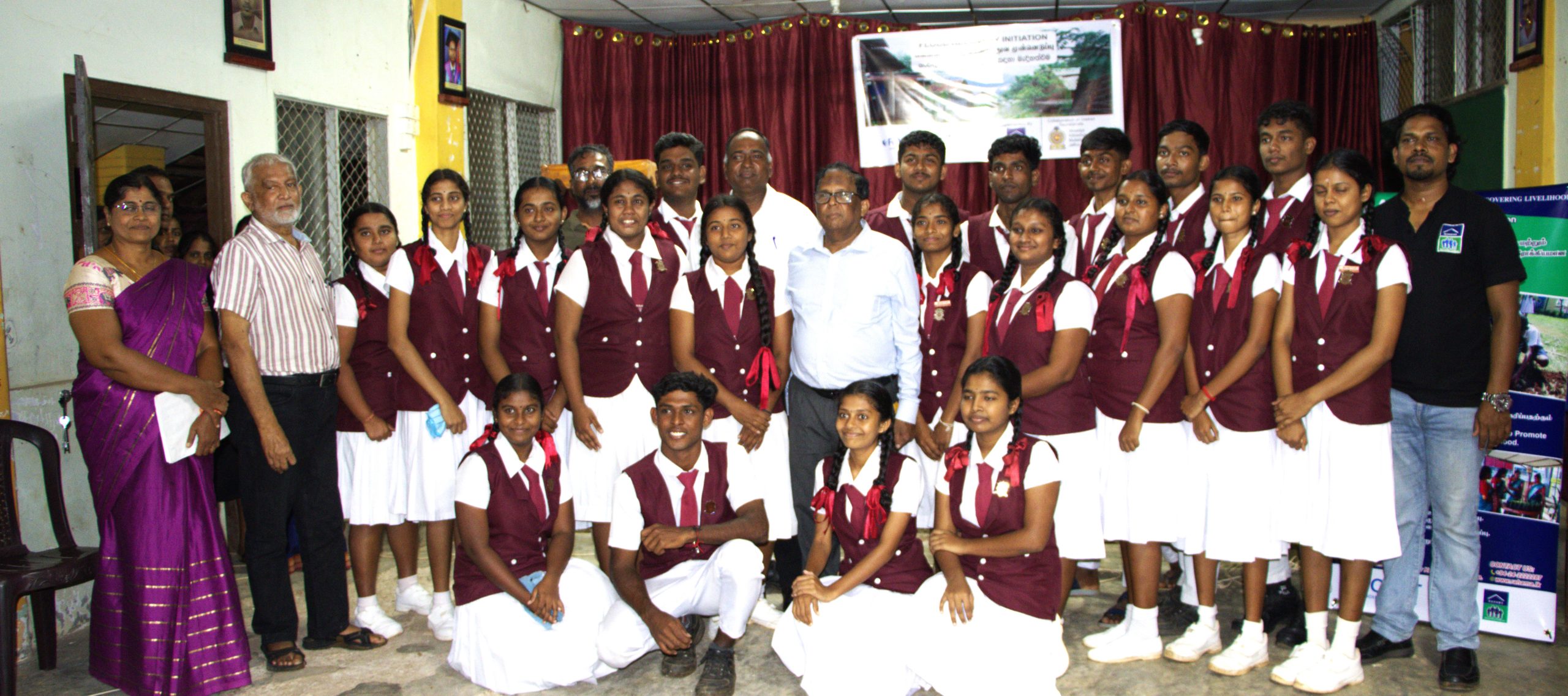
Yesterday, at Palinagar Maha Vidyalayam, Manthai-East, 64 students received the kits with participation of Hon. N. Vedanayagam, Governor of Northern Province. The governor highlighted that experts and professionals should come from their own village to develop your village or division, and for that, education is the key that cannot be vanished away to any catastrophe or crisis.
School authorities and partner organizations at divisional level worked with families and individuals in coordination with our field coordinators as part of RAHAMA’s 6-pillar strategy to serve the war-torn villages across Northern Sri Lanka.
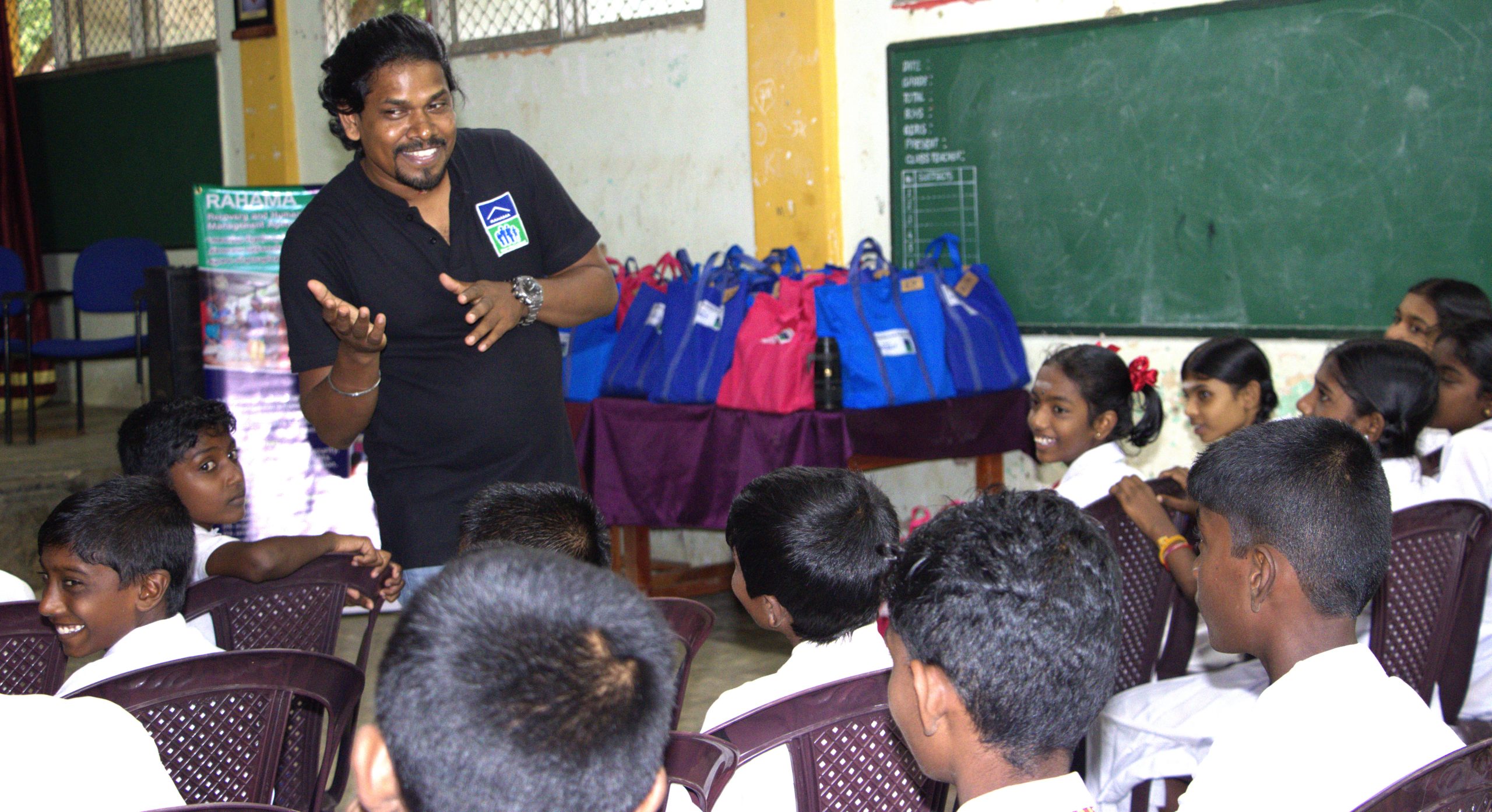
Our Field Coordinators and partners witness that whenever children who experienced the catastrophe and lost their belongings need psycho-social support through initial interaction among all other students. We delivered a motivation session inviting the students to restart active learning.
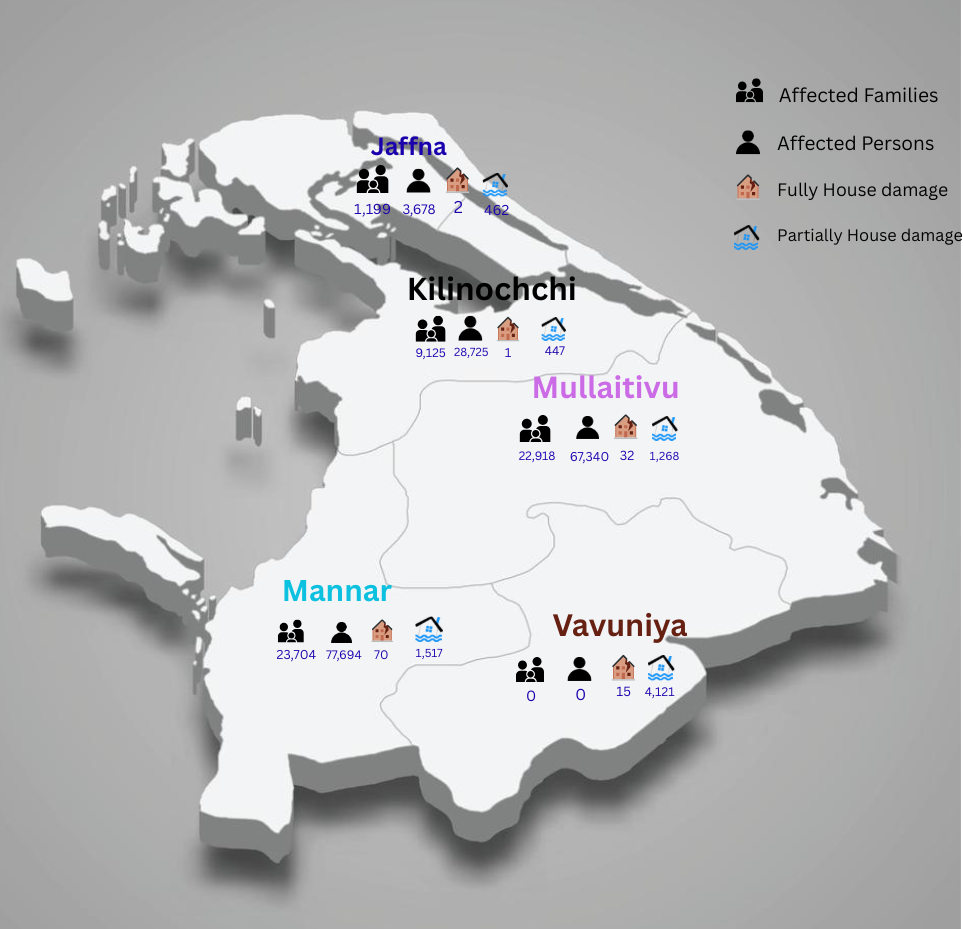
RAHAMA works for rural communities in Northern Sri Lanka where over 277,629 persons have been identified as affected soon after the catastrophe, and it had decreased to 177,473 as of Dec 16, 2025 by the Disaster Management Centre, Sri Lanka. Affected families who sought safety at 145 safety centers across the province have fully either left the centers or returned home. Over 56,946 families have been affected including those who sought shelter at 145 safety centers across the province. Restoring water facility and sanitation is another challenge the schools face after reopening.